
The Brief: Interdictions Were Always An Option
Hi friends,
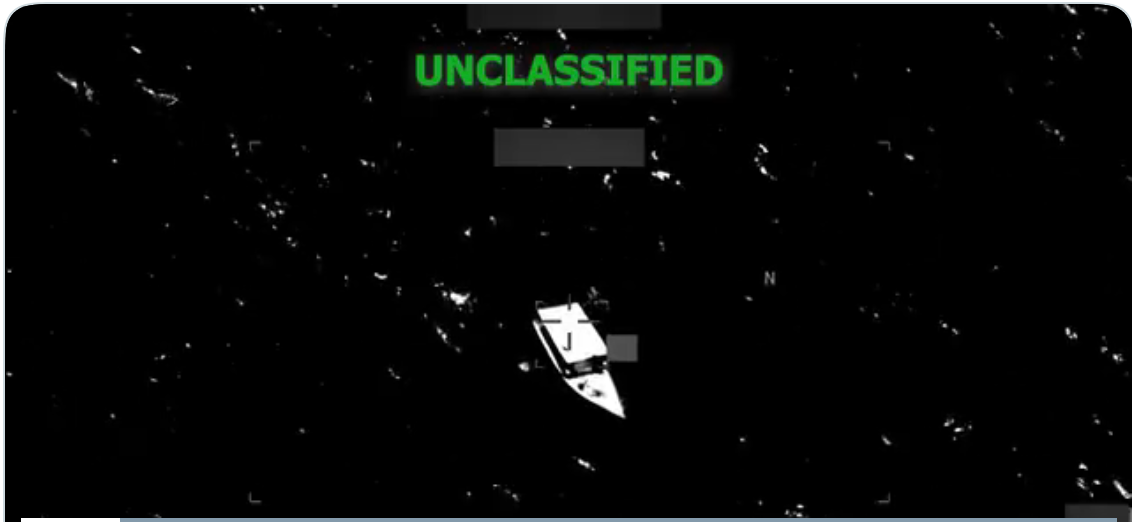
On a trip to Ecuador last week, a journalist asked U.S. Secretary of State Marco Rubio whether U.S. strategy to combat drug trafficking in the region had changed, including whether cooperative efforts had replaced military strikes on vessels suspected of carrying drugs. Setting aside the fact that the military strikes have not stopped—a strike on September 9th in the Caribbean killed at least three people—I want to dig into Secretary Rubio’s response, and what it misunderstands, or at the very least misrepresents, about the history of U.S. cooperation to combat maritime drug trafficking.
What did Secretary Rubio say exactly?
You can see the relevant part of the press gaggle here, beginning around minute 1:34.
The journalist stated as part of his question that while the U.S. had previously just blown up the vessels, “now, it seems that you intercept them first, stop them, get the people off.”
Secretary Rubio responded that the the U.S. and Ecuador were jointly conducting operations in Ecuador’s territorial waters to counter drug trafficking “as part of the bilateral agreements we have with these countries which is…an incredible advance for the first time to have countries that are willing to participate in these efforts in their territorial waters. And then obviously we have to operate according to their laws and [sic] their territorial waters or their systems and protocols that they set in place. The important point is that these routes are being disrupted.”
He went on to state, “[U]nderstand the difference between that and what you saw early last year is those were unilateral operations in international waters. These are combined operations in territorial waters where we are working with sovereign nations in their own territorial waters. And when you do that, you have to do it based on the understandings that you have with them.”
Why did this press conference make me bang my head against the table?
Many reasons! Among them:
The characterization of the law of the sea is not exactly right
Secretary Rubio is correct that under international law, coastal states have sovereignty over their territorial seas, including any law enforcement operations that take place there. They also have rights over natural resources, such as fisheries, in their exclusive economic zones. However, the high seas—what Secretary Rubio refers to as “international waters”—is not a lawless zone where anything goes. To the contrary, ships on the high seas are subject to the jurisdiction of the state where they are registered, often referred to as the “flag state.” If another country wants to stop a ship, and to board and inspect it, in general, and with a few exceptions, it needs either the consent of the captain of the ship (referred to as the “master”), or the consent of the flag state itself. Flag state consent is especially important where the boarding is part of a law enforcement operation where the vessel, its cargo, or its crew may be seized.
In other words, we can’t just do whatever we want to a ship from another country because it’s on the high seas. If a ship sailing on the high seas and flagged to Ecuador is suspected of trafficking drugs, we would still need Ecuador’s permission to board and inspect it and seize any drugs on board. While countries have additional leeway to board vessels that are believed to be “stateless,” or not registered to any state, that leeway does not extend to blowing those ships up from the air without attempting to intercept or board them. That is not law enforcement, that is murder.
But we’ve been over that before.
Counter-maritime drug trafficking agreements are not new
The “incredible advance for the first time” language is what really did me in. The U.S. has negotiated agreements to counter maritime drug trafficking since the 1990s: we signed one with Belize in 1992, and one with Antigua and Barbuda in 1995, to give just two examples.
Even the agreement between the U.S. and Ecuador is not all that new! The Agreement Between the United States of America and the Republic of Ecuador Concerning Counter Illicit Transnational Maritime Activity Operations was signed in September 2023 and entered into force in February 2024, during the Biden Administration. If you take a close look at that timeline, it was a year-and-a-half before the Trump administration began its deadly boat strikes in September 2025. (Other maritime law enforcement agreements with countries in the region have been in force even longer, such as the agreement with Colombia, which dates to 1997.)
What’s frustrating here is that many of us have been asking since even before the military strikes began—in my case, since the U.S. first moved Navy assets to the coast of Venezuela in August 2026—what the U.S. would gain from military operations that it could not gain from Coast Guard interdictions and the frameworks provided by bilateral maritime law enforcement agreements, particularly given the clear indications that military strikes on vessels violate international law.
In contrast, maritime law enforcement agreements provide well-established avenues for combatting drug trafficking, are supported by domestic and international legal authorities, and provide a number of diplomatic tools that the U.S. can use with its partners. These agreements are often referred to colloquially as “shiprider” agreements, as they allow officials from partner countries to ride along on Coast Guard vessels (or vice versa) to patrol their country’s waters and authorize the interdiction of vessels suspected of drug trafficking or other illicit activity such as weapons smuggling or illegal, unreported, and unregulated fishing. The Coast Guard has a great deal of experience running these bilateral operations, and they are carefully conducted to minimize the risk of loss of life. (For example, the bilateral agreement with Ecuador requires that any use of force must be limited to that which is “reasonably necessary under the circumstances.”) Shiprider agreements also allow the U.S. to contribute resources such as ships, training, and personnel to help partners better enforce against illicit activity that spans maritime boundaries.
In sum, there is no good reason why, if combatting drug trafficking at sea is truly a priority for this administration, we couldn’t have been focusing additional resources on these cooperative efforts all along instead of killing at least 230 people without due process. But maybe that doesn’t play as well on Truth Social.
Also on my radar
- The AI company Anthropic released a report last week revealing that militants in Northern Yemen used Claude to run programs capable of producing guided rockets and ballistic and hypersonic missiles, including their guidance, navigation, and control software. The report comes at the same time as President Trump rebuffed calls from leaders of AI companies to slow down AI development, saying, “We’re leading China in AI…and frankly I want to keep it that way. Whoever wins AI wins;”
- The tit-for-tat visa denial between the U.S. and Brazil continued last week, as the U.S. withheld visas for Brazilian law enforcement agents assigned to work with U.S. federal agencies to counter transnational crime. In response, Brazil blocked the visa of a U.S. law enforcement agent assigned to the country. (We’ve covered previous salvos here and here);
- A judge has ruled that the lawsuit brought by the nonprofit publication Lawfare against the U.S. Department of State alleging violations of the Case-Zablocki Act can proceed to the merits. (In other words, the judge ruled against the government’s motion to dismiss the case.) The lawsuit alleges that the Department has failed to meet the Case-Zablocki Act’s requirements to publicly post updates on (and texts of) binding international agreements and significant nonbonding international instruments.
One quick admin note as we close out: Vin Diesel has not yet responded to my offer to provide audio narration for one of our newsletters, but you still have a chance to contribute! If you work in the foreign affairs or humanitarian aid space and would like to contribute a guest post, let's connect.
You can follow The Connection on Bluesky, Facebook, Instagram, LinkedIn, and Threads.